Applied AI for the physical economy
Your data already knows the answer.
Manufacturers and laboratories spend months and many wafers finding a process that works, while the data that would shorten the search sits unused in spreadsheets and tool logs. MINA combines hands-on process engineering with modern optimization to get you there in fewer runs.
The problem
The bottleneck isn't ideas. It's the cost of testing them.
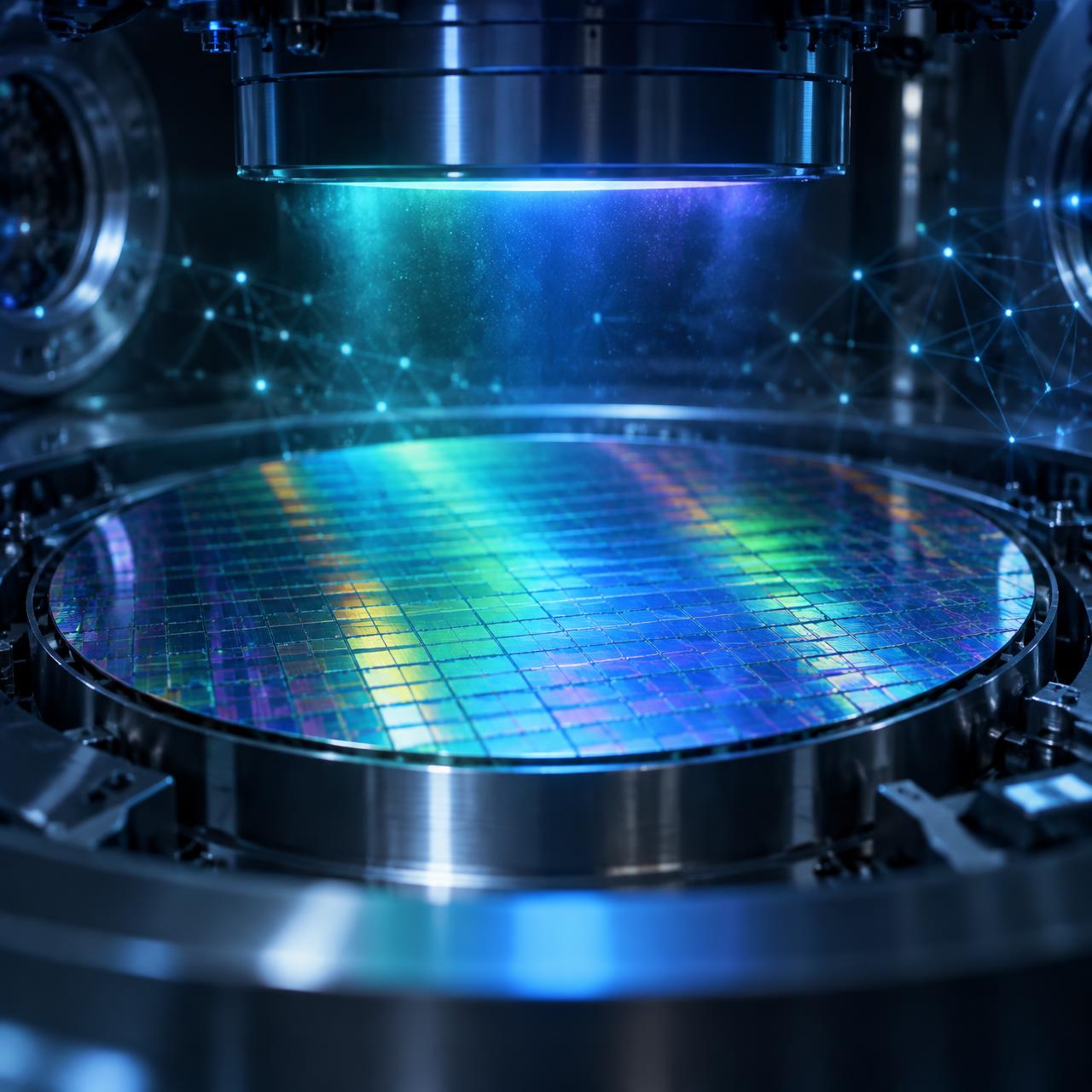
A single deposition campaign can consume a large stack of wafers and months of tool time to map a usable process window. Most teams still explore that space one variable at a time, because the engineers who own the tool aren't data scientists, and the vendors selling AI have never run a production chamber. We are both.
One factor at a time
14 runs to reach target (illustration)
Designed search
2 runs to reach target (illustration)
Every run costs wafers, precursor, and tool time.
One-factor-at-a-time searches miss the interactions where the useful behavior lives.
Most metrology and tool data is never analyzed beyond pass or fail.
What we do
Two practices. One product.
Two practices and one product, built around a single idea: organizations that make physical things are sitting on data that can shorten their development cycles.
MINA AI Studio
Applied AI and data projects for companies that make physical things, scoped to what you actually need rather than to a platform we're trying to sell.
- Data readiness assessment
- Process and quality analytics
- Custom model development
- Workflow integration
MINA Materials
Machine learning and statistical design of experiments applied to thin-film and materials process development: PVD, ALD, PECVD, and the metrology around them.
- Process window optimization
- DOE design and acceleration
- Yield and defect analytics
- Historical data recovery
Bridge
Credential verification infrastructure that connects the people who hold credentials with the institutions that need to trust them, without weeks of manual primary-source checking. Every verification leaves a tamper-proof record on a blockchain, with no cryptocurrency involved.
- Institutional verification
- Tamper-proof verification records
- Continuous credential monitoring
- Individual-controlled records
Approach
How an engagement works
We start with the data you already have. It usually answers more of the question than anyone expects, and it costs you no tool time.
STEP 1
Assess what you have
We structure your existing runs, metrology, and tool logs, including the failures, which usually carry the most information, and tell you what they can already answer.
STEP 2
Model the process
Surrogate and physics-informed models of how your process variables drive the properties you care about, constrained so predictions stay sensible where data is sparse.
STEP 3
Design fewer experiments
Bayesian experimental design picks each next run to maximize what you learn, the right method when every data point costs real money.
STEP 4
Hand over the window
A process window map, the model, and ranked setpoint recommendations with predicted outcomes and honest uncertainty. Yours to keep and reuse.
Why the methods matter
Built for data that's scarce and costly
Off-the-shelf machine learning assumes abundant, cheap, independent data. Materials data is none of those things, which is why generic AI tools disappoint experienced process engineers.
Materials data is…Small (tens to low hundreds of runs)
So we use…Bayesian experimental design, built for small samples
Materials data is…Expensive (every point costs wafers and tool time)
So we use…Sequential designs that maximize information per run
Materials data is…Noisy and dependent on tool history
So we use…Physics-informed constraints that keep predictions physically sensible
Materials data is…Multi-objective (targets genuinely conflict)
So we use…Trade-off surfaces you can choose from, not one collapsed score
Engagements
Ways to work together
Most clients begin with a Data Readiness Assessment. It is small enough to approve without a procurement cycle, delivers value on its own, and tells both of us whether a larger project is worth doing.
Data Readiness Assessment
Audit of your existing process and metrology data, findings report, and roadmap
2-3 weeksProcess Optimization
Designed campaign, fitted models, and a qualified process window
3-6 monthsCustom Model Development
Client-specific predictive models, documented and transferable to your team
4-8 monthsWorkflow Integration
Models and automation embedded into your existing engineering workflow
2-5 monthsRetained Advisory
Ongoing optimization support embedded with your process team
OngoingTraining Workshop
Design of experiments and applied ML, taught to your engineering team
2 daysWho we serve
For teams that make physical things
Semiconductor and MEMS fabs
Materials and equipment suppliers
Energy materials (batteries, solar, coatings)
Research laboratories
Industrial manufacturers
Team
Who you'd be working with
Domain science and production engineering in the same small team, the combination this work actually requires.
Mesut Yurukcu, Ph.D.
Chief Executive Officer and Co-Founder
Applied physicist and process engineer with hands-on PVD, ALD, and PECVD experience, thin-film characterization, DOE-driven process engineering, and nanofabrication. Peer-reviewed publications and grants record. MBA and MPM.
Mina M. Nurjan
President and Co-Founder
Cloud infrastructure and production deployment engineer. Builds systems that run reliably and securely against sensitive client data.
Ismail Cil
Chief Technology Officer
20 years of experience in software development and coding.
What's eating the most tool time in your group right now?
That's the only question we need to start with. If we can't see a path to fewer runs, we'll tell you, and it will have cost you one conversation.
Email us